Darius Nazarov · 2026

Mold.log

A digital laboratory for growing mold. Made during an online residency at CMMAS, Mexico.

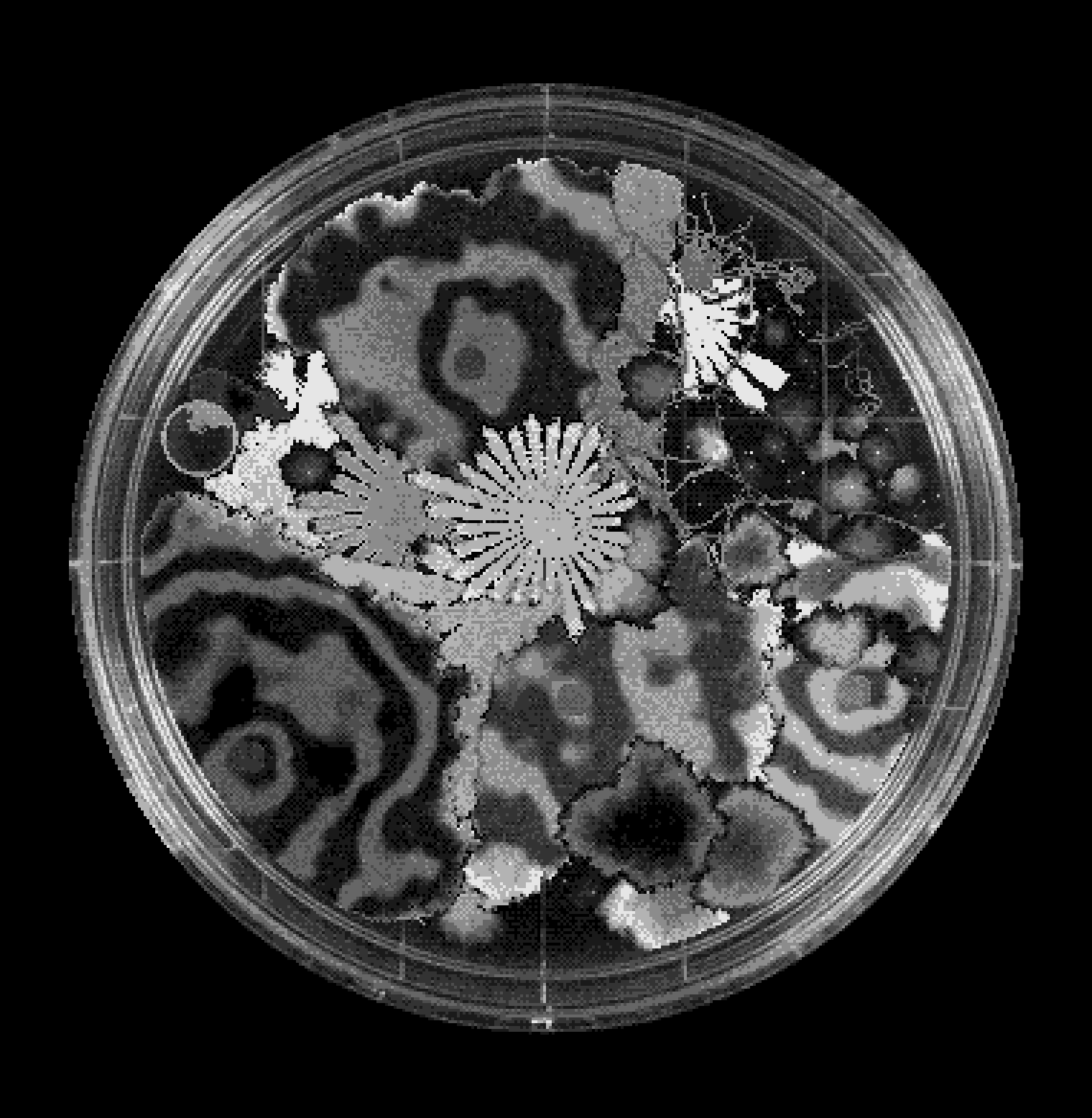
A Petri dish fully grown with digital mold coloniesSeed . 311232361 / 1Mold.logDariy Nazarov / 2026
The work

Mold.log

Generative web work, 2026CMMAS online residency, MexicoAsync Museum, 2026

Mold.log grew out of an online residency at CMMAS (Morelia, Mexico). Working with the curator, Darius Nazarov developed the theme of parallel digital biology: if science studies reality, art can study digital reality through the methods science relies on — experiment, observation and simulation. For his laboratory the artist took mold species found in Mexico.

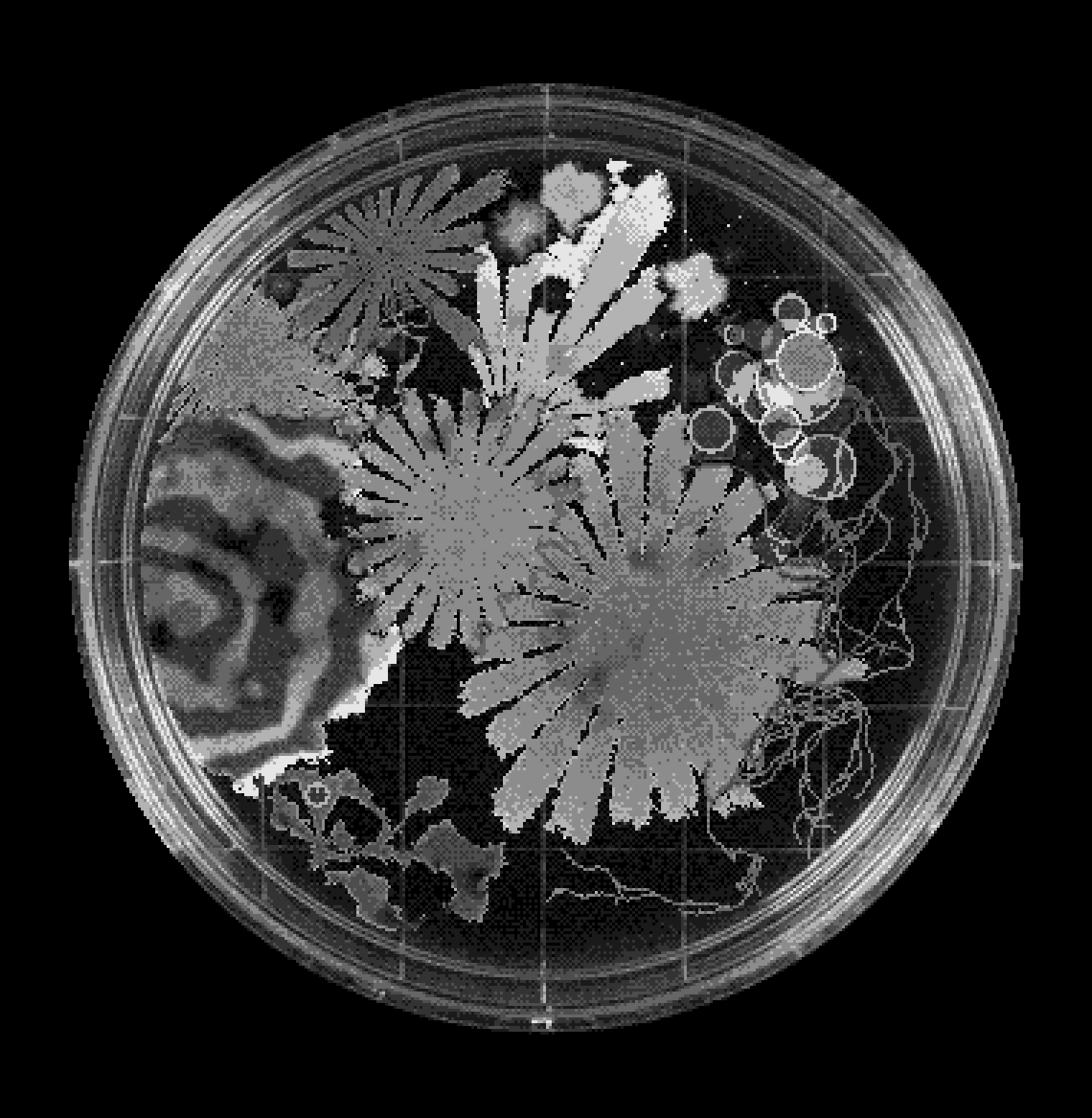
The result is a digital laboratory. Spores are placed in a Petri dish, and the colonies grow, compete for nutrients and take over the whole space. Each experiment lasts a few minutes, ends with the dish being burned, and begins again.
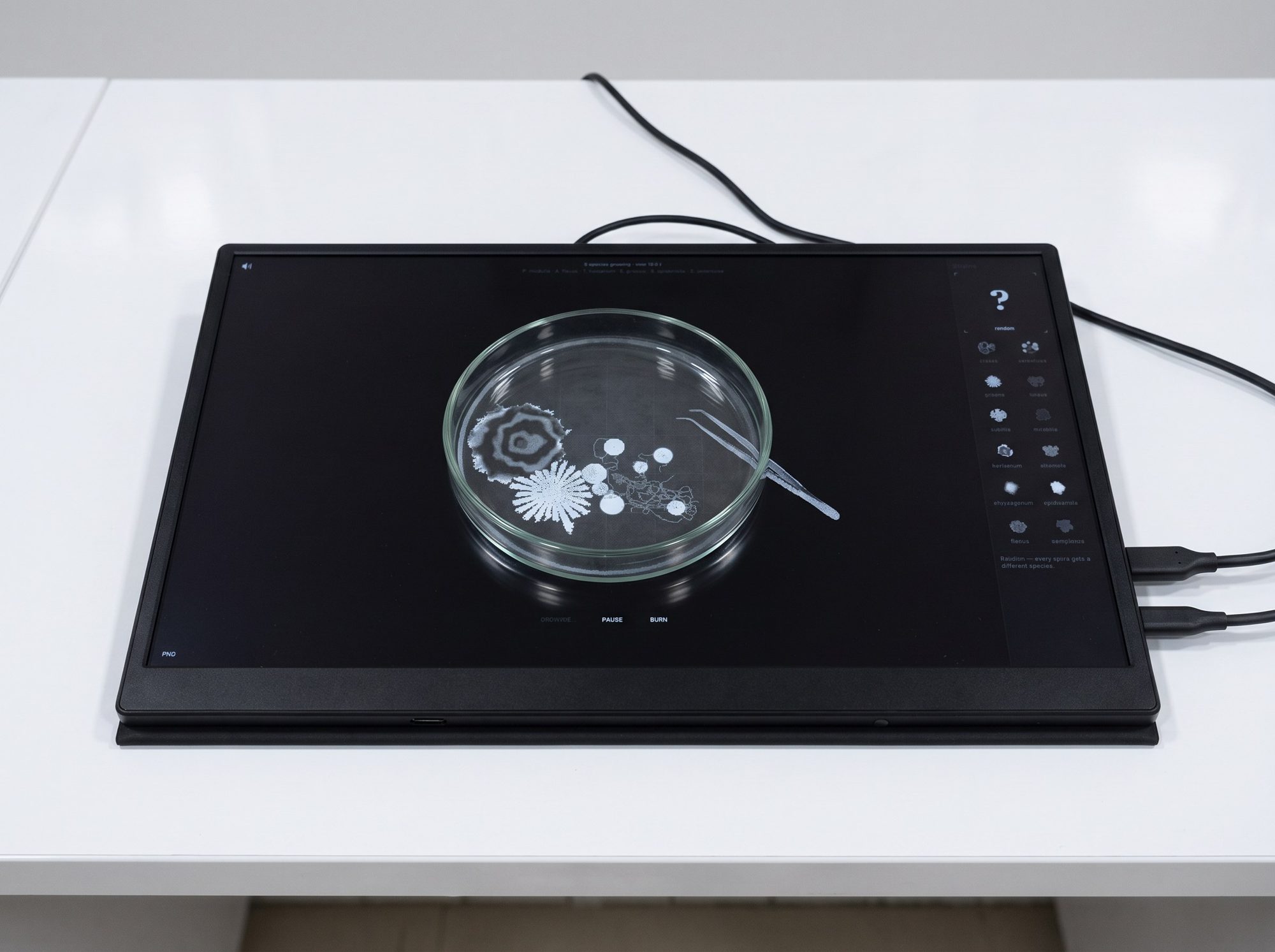
Mold.log running on a portable screen on a white table
Mold.log on screen, interactive version. In the exhibition it runs autonomously, with no panels or buttons.
Mold.log

Prints

Pigment print, 2026Unique, edition 1 / 1

Prints are the documentation of the digital laboratory. Each sheet records a colony in the most active phase of its growth.

Each print is marked. It exists as a single copy: a new specimen is grown for every collector.

  • 40 × 30 cmBlack or white sheet
  • 70 × 50 cmBlack sheet
  • PriceOn request
Print 70 by 50 cm, black sheetSeed . 311232361 / 1Mold.logDariy Nazarov / 2026
70 × 50 cm
Print 40 by 30 cm, black sheetSeed . 407115291 / 1Mold.logDariy Nazarov / 2026
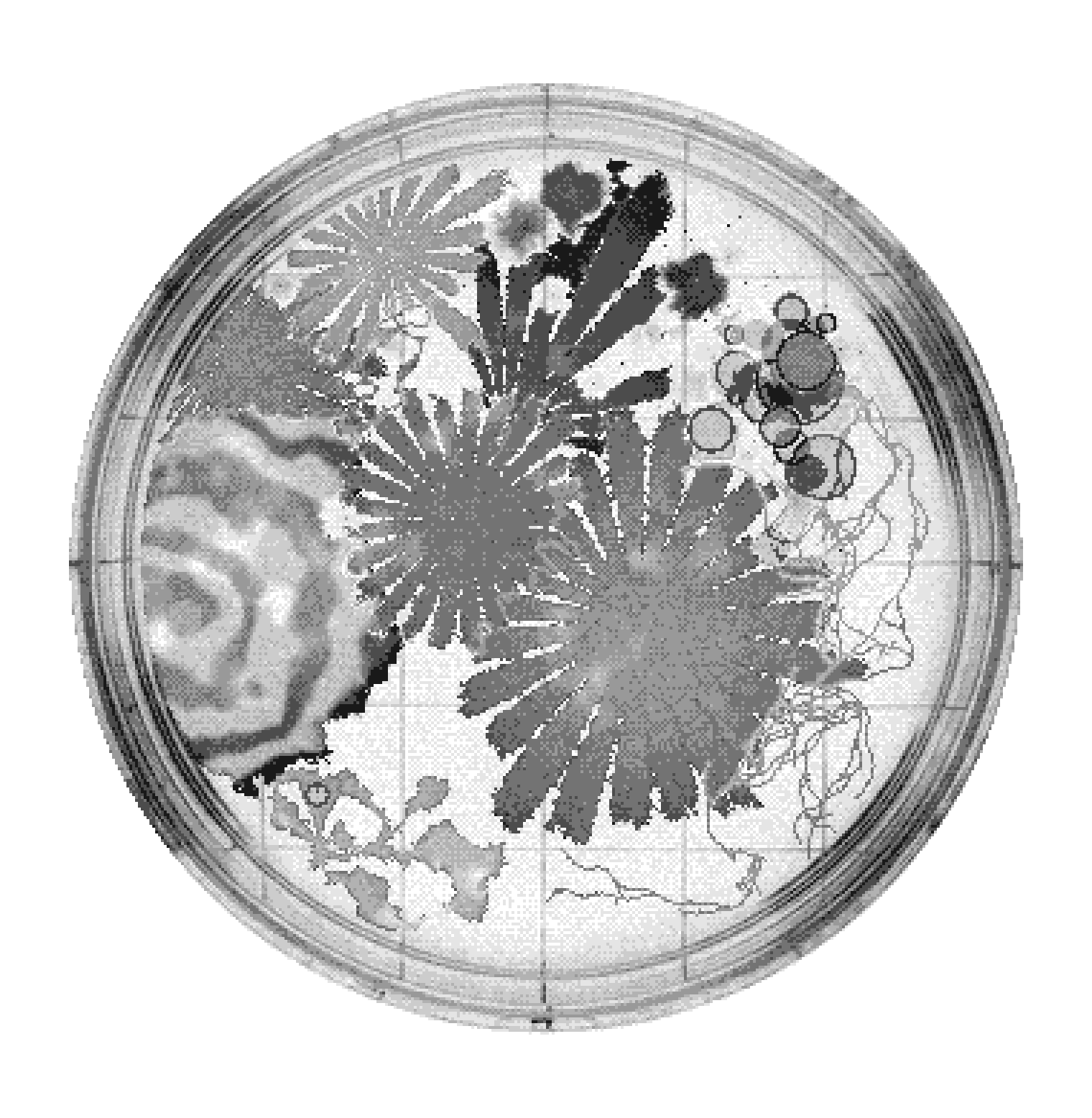
40 × 30 cm
Print 40 by 30 cm, white sheetSeed . 407115291 / 1Mold.logDariy Nazarov / 2026
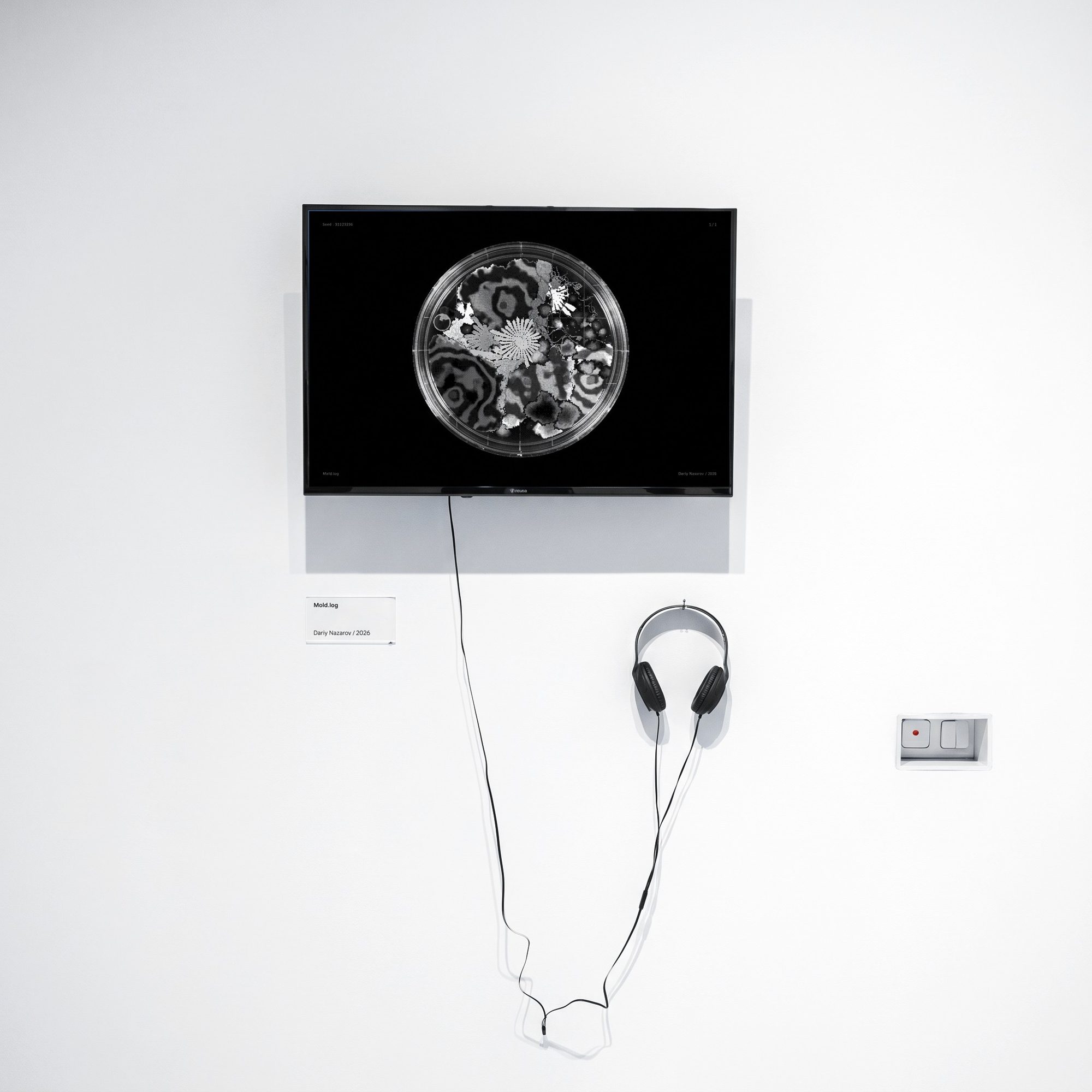
40 × 30 cm, white sheet
Mold.log

Installation

Mold.log, 2026Wall screen, headphones

The installation shows the digital laboratory at work in real time. On screen is a Petri dish: spores are placed automatically, the colonies grow and take over the whole space, after which the specimen is destroyed and the experiment begins again.

The headphones carry the sound of the colonies growing. The work needs no input from the viewer and no maintenance.

  • EquipmentScreen from 32″, computer with a web browser, headphones
  • Set-upRemote, via a link, ~1 hour
  • AcquisitionDigital work: full access and source files
  • PriceOn request
Mold.log installed on a wall screen with headphones and a label
Mold.log, installation view
OGO×WOW Buro

Other works by Darius Nazarov and Polina Ishukova

Stone Skipping

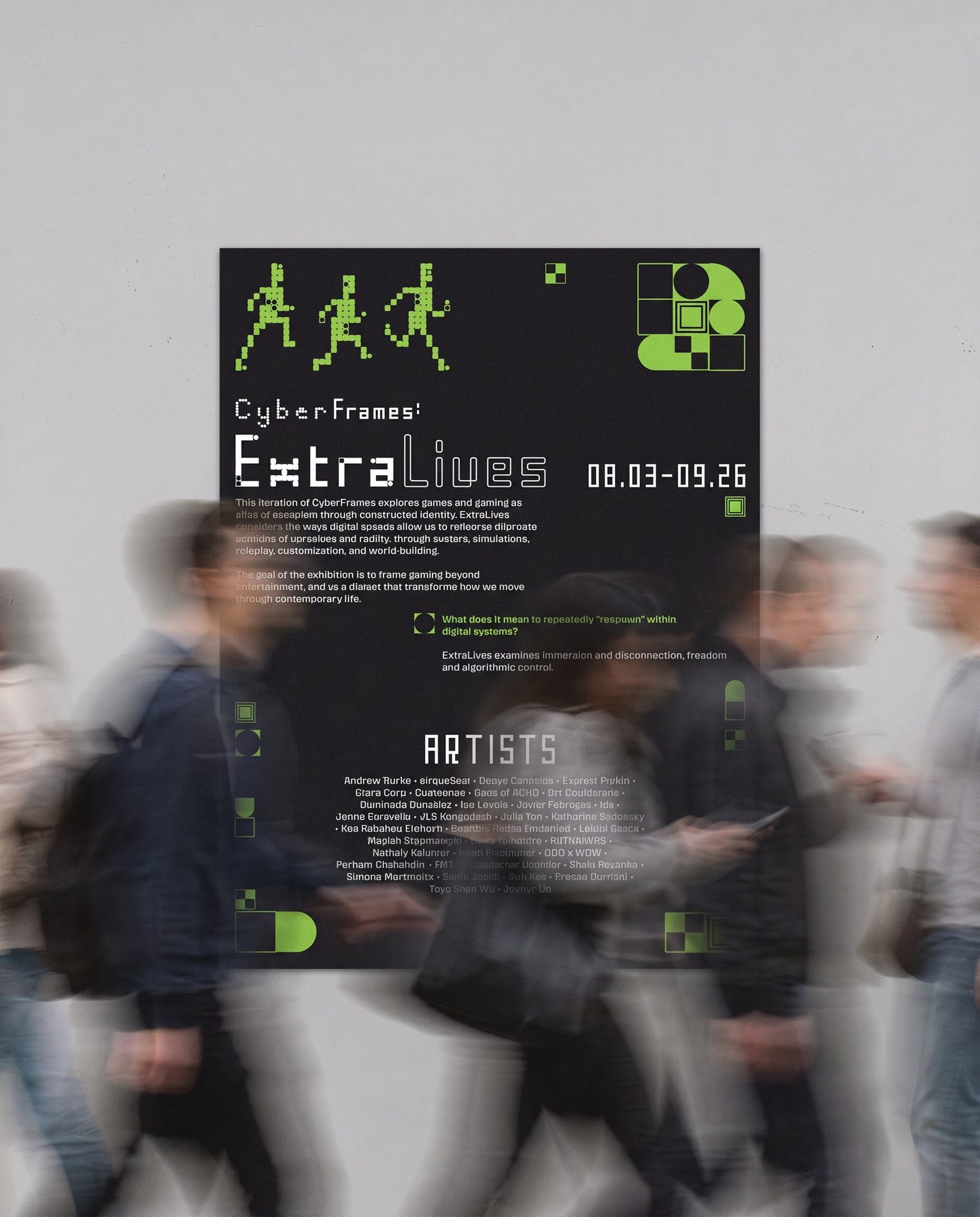
Browser game, 2026CyberFrames: ExtraLivesBoston Cyberarts Gallery, Boston

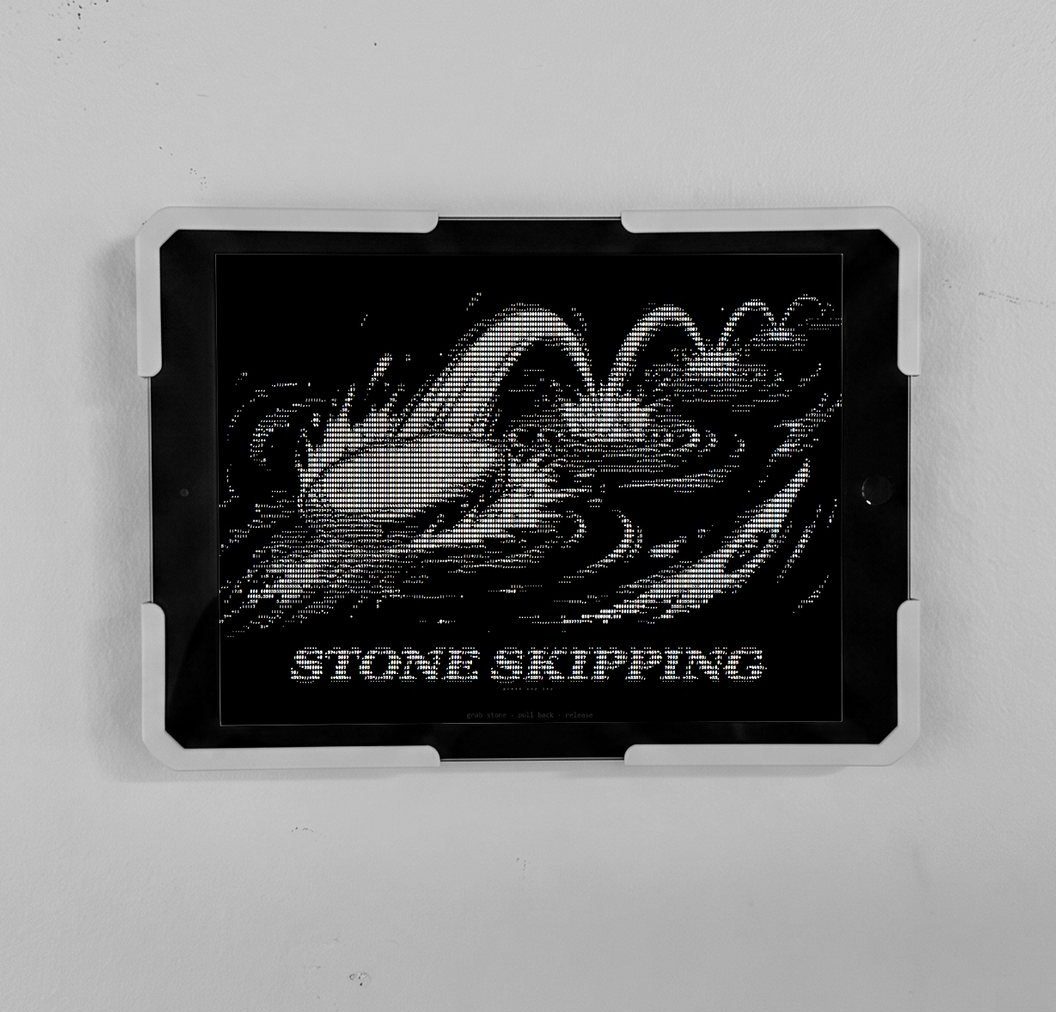
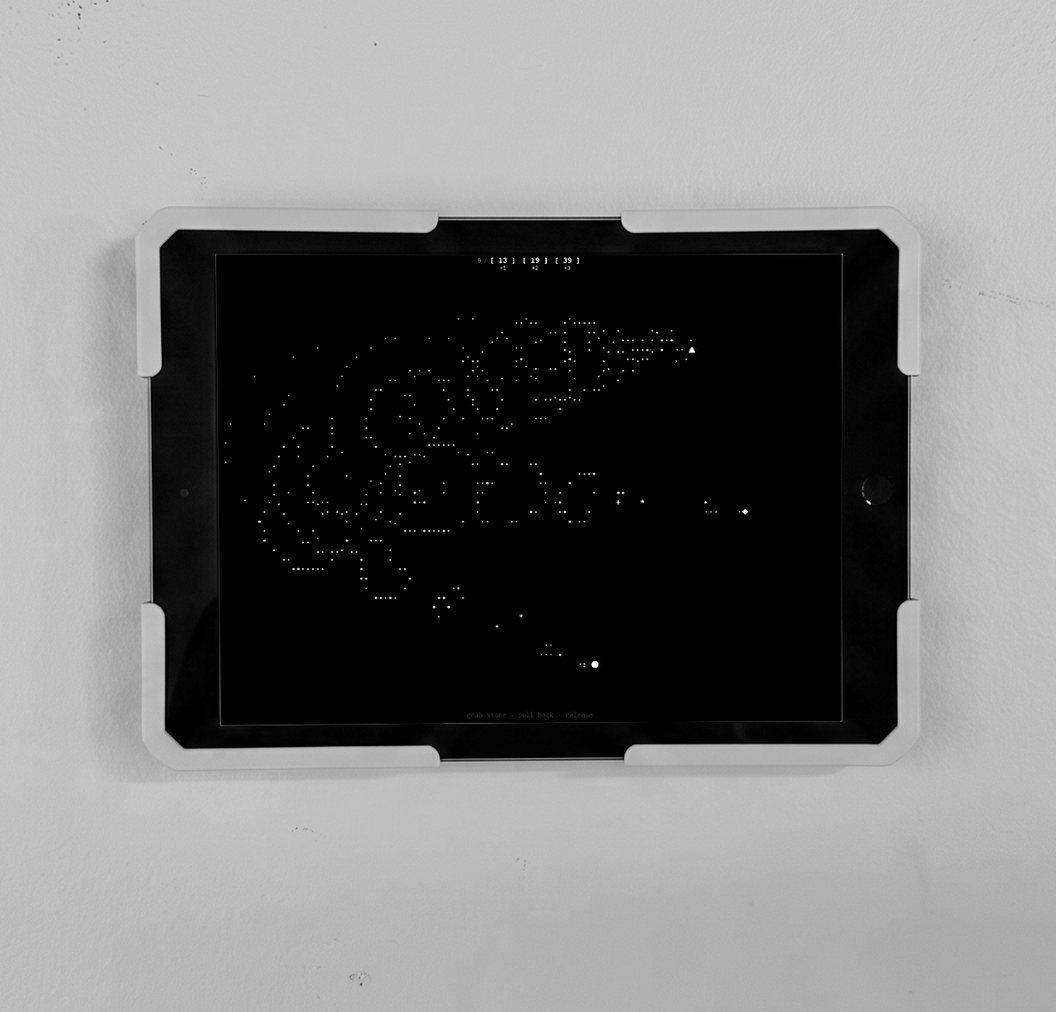
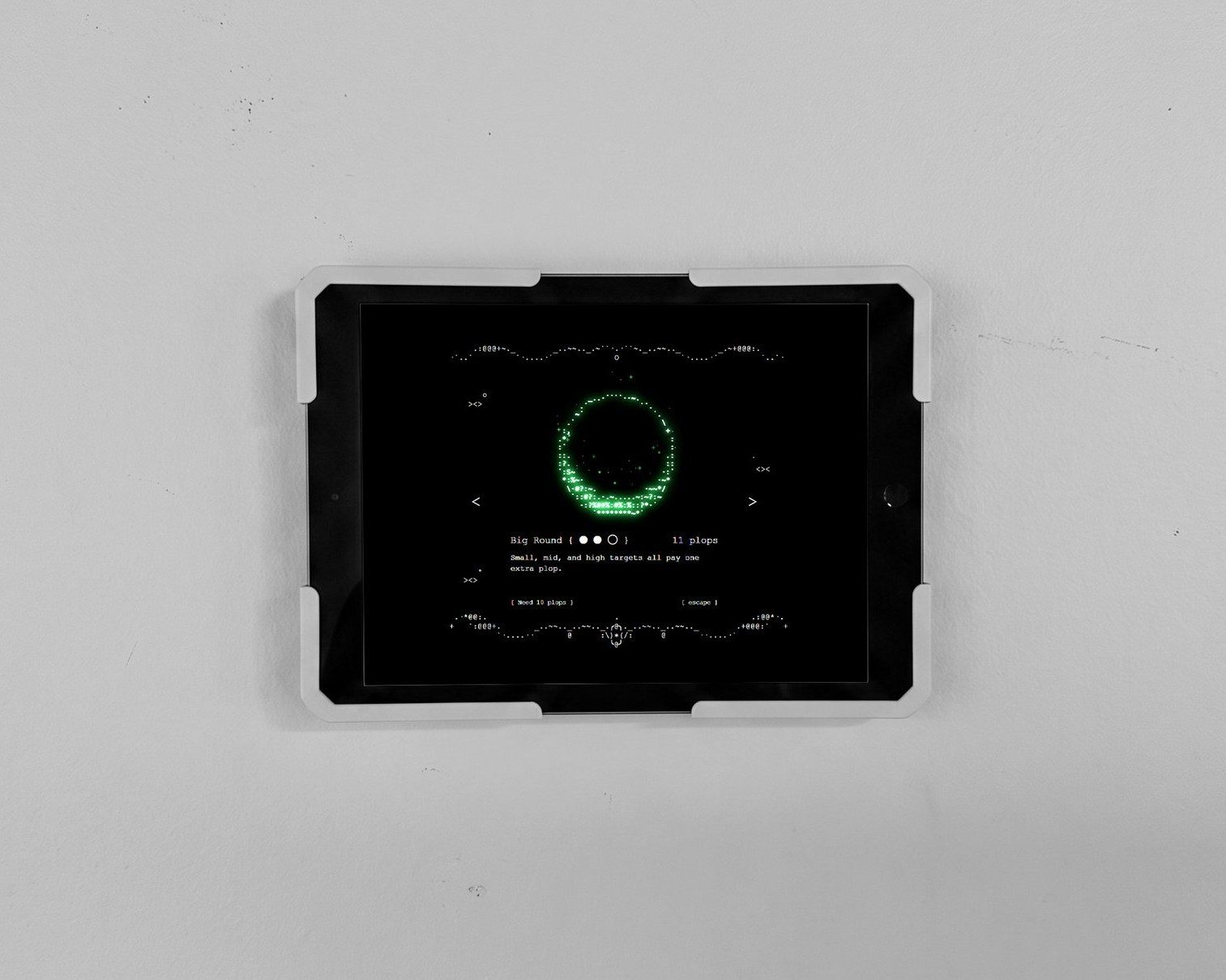
A game about skipping stones on water. The water, the stone and the splashes are drawn in ASCII characters, while the physics of the throw is real: angle, force, number of bounces.

In real life this small pleasure needs time, a calm day and the right shore. Here it is available any time, as many times as you like. The work was shown on tablets in a group exhibition about games as a way to briefly escape reality.

Concept, code, sound, ASCII graphics
Play Stone Skipping →
Stone Skipping game shown on a tablet
Good throws earn Plops, which buy mystical stone upgrades
Stone Skipping title screen in ASCII
Title screen
Stone Skipping challenge screen
Challenge: hit an exact number of bounces
ExtraLives exhibition poster at Boston Cyberarts Gallery
Exhibition poster at the gallery

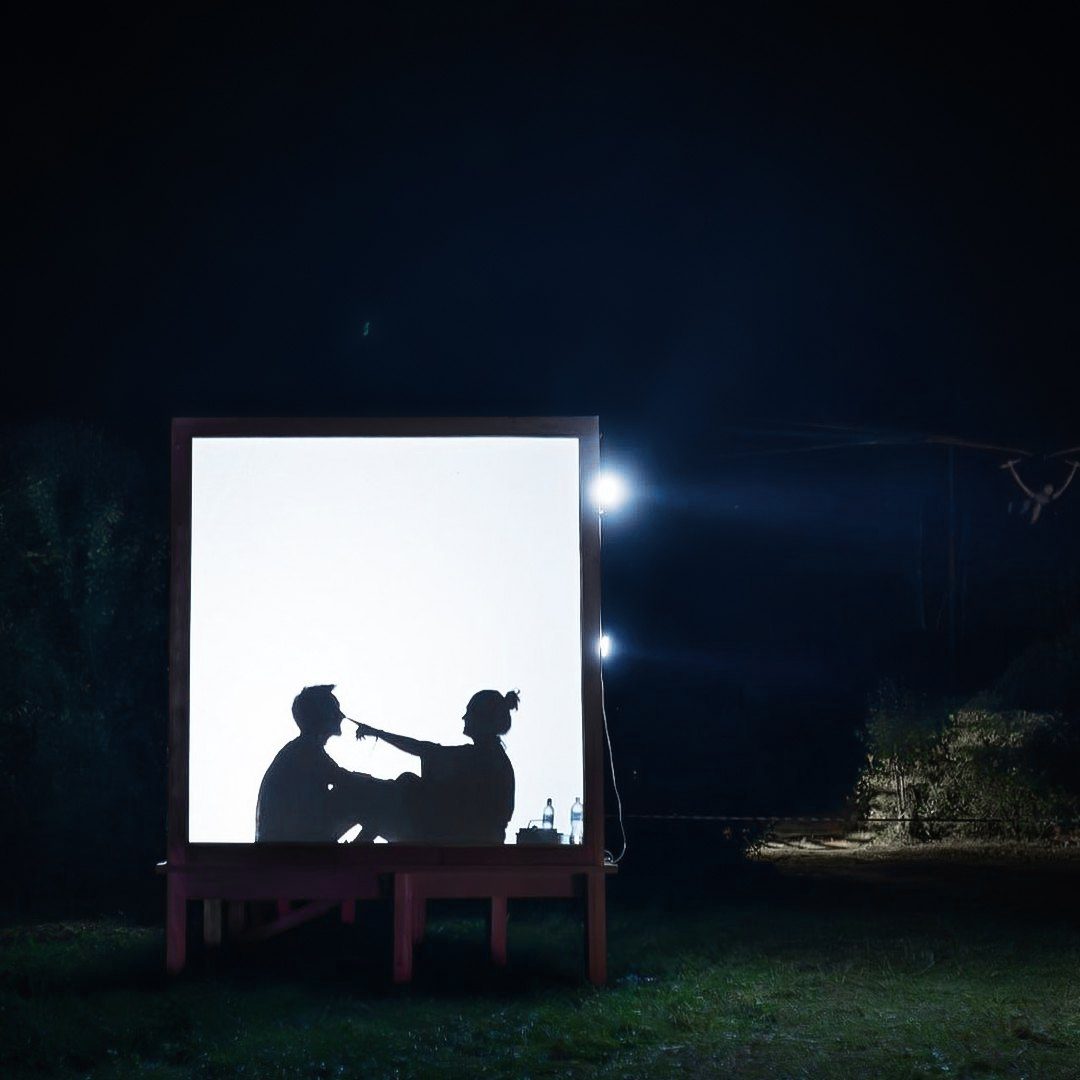
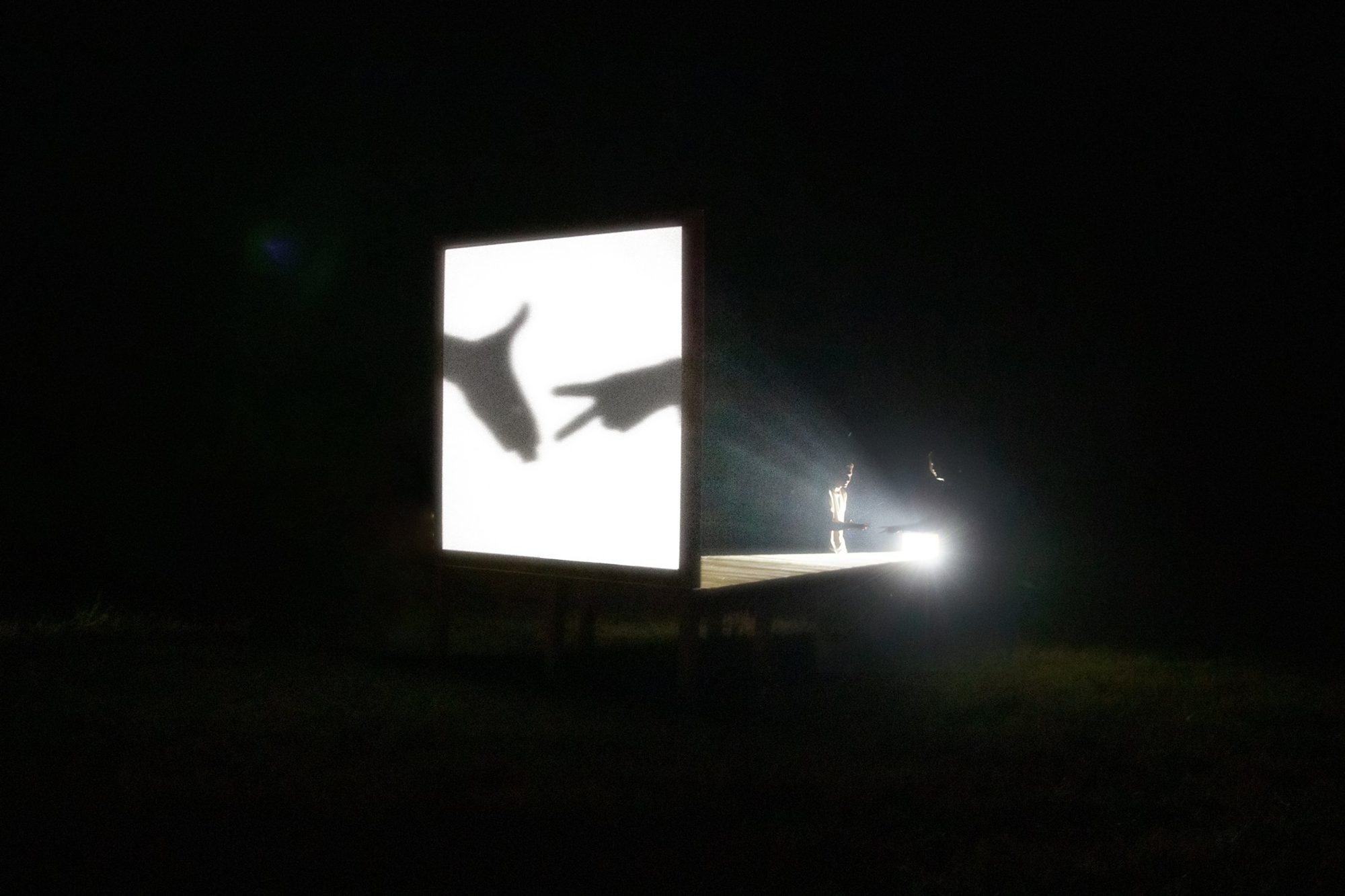
Screen pavilion

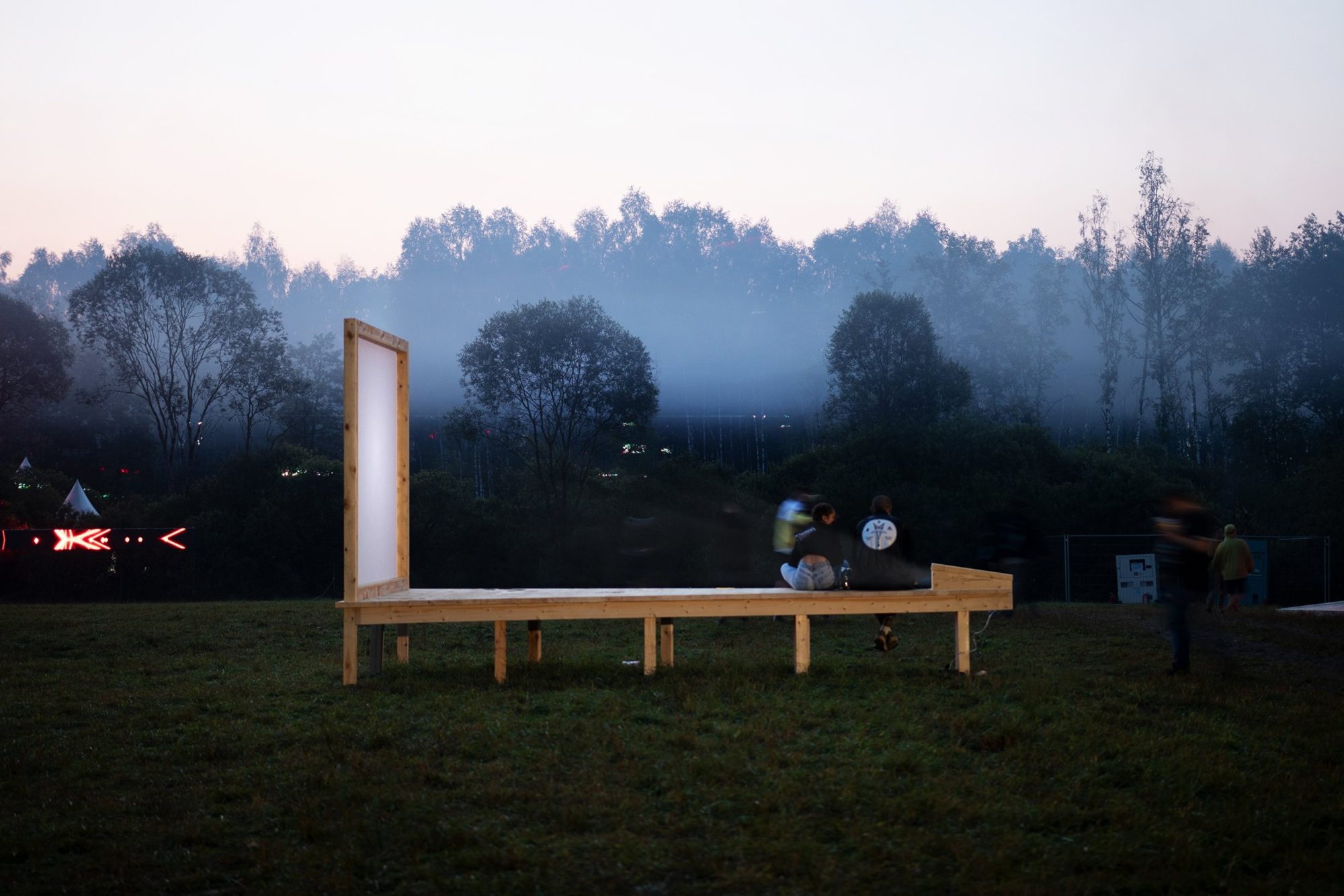
Temporary art object, 2023Signal festival, Nikola-LenivetsWinner of Signal 2023: Art Call

The festival grounds stretch over dozens of hectares, and mobile coverage is patchy. Screen is a way to send a message without a phone.

The translucent canvas is visible from both sides. A spotlight turns anyone who steps into the beam into a shadow. Gestures, letters and silhouettes can be read from far away: the bigger the screen, the further the message travels.

Concept, visualisation, cost estimates, construction drawings, installation
Photo: Dmitry Burmistrov
Featured in Project Russia →
Screen pavilion in a field at dusk
Shadows of two people on the lit screen at night
Hands casting shadows on the screen

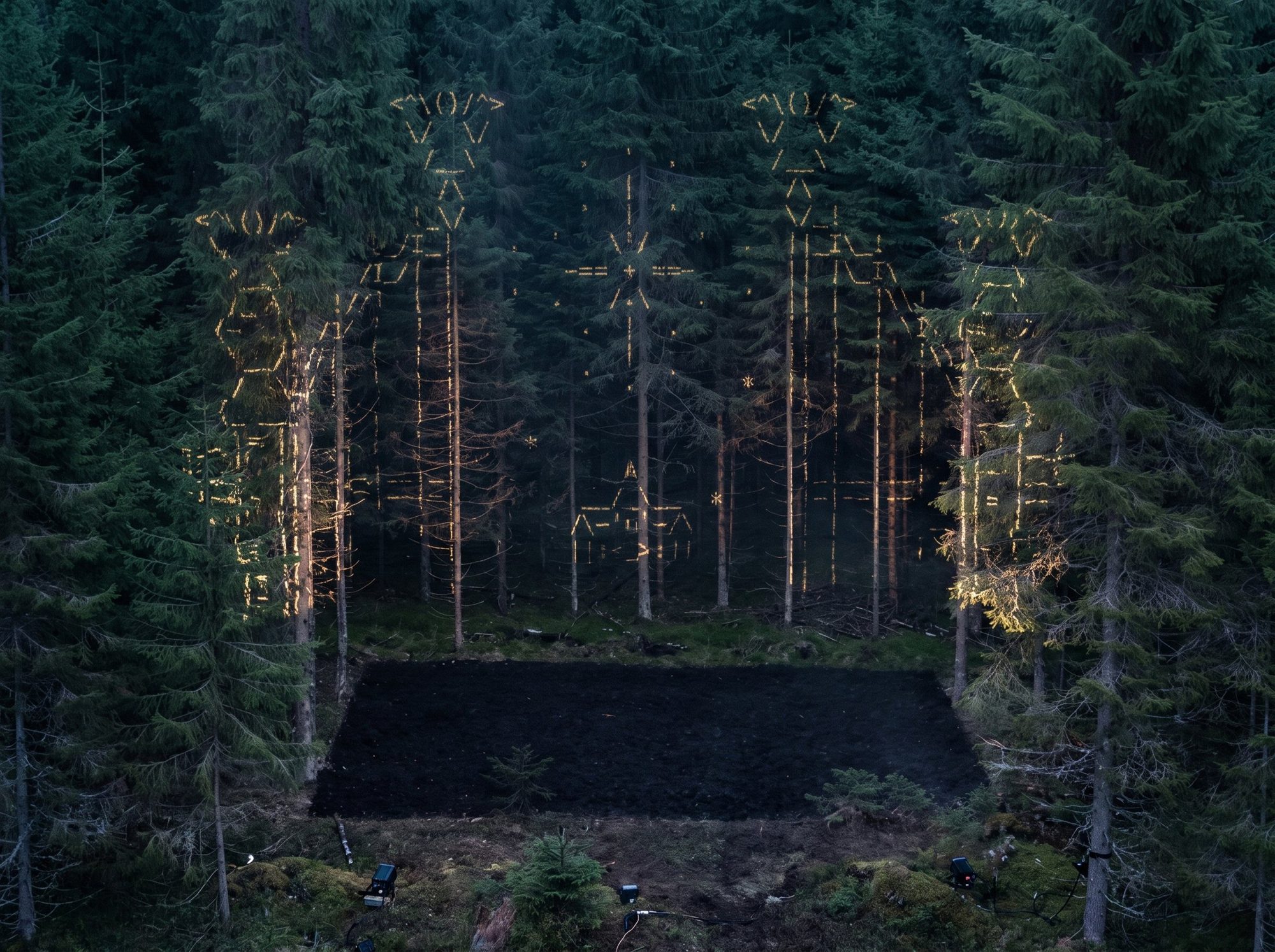
Portal

Projection mapping, 2024Signal festivalNikola-Lenivets art park

The edge of a forest has countless entrances: you can step in between any two trunks. The project picks one of them and turns it into the main portal.

The projection draws figures made of ASCII characters onto the trunks and branches. The abstract wall of spruce gets a human, recognisable image: columns, faces, silhouettes at the entrance.

ASCII projection on spruce trunks at night

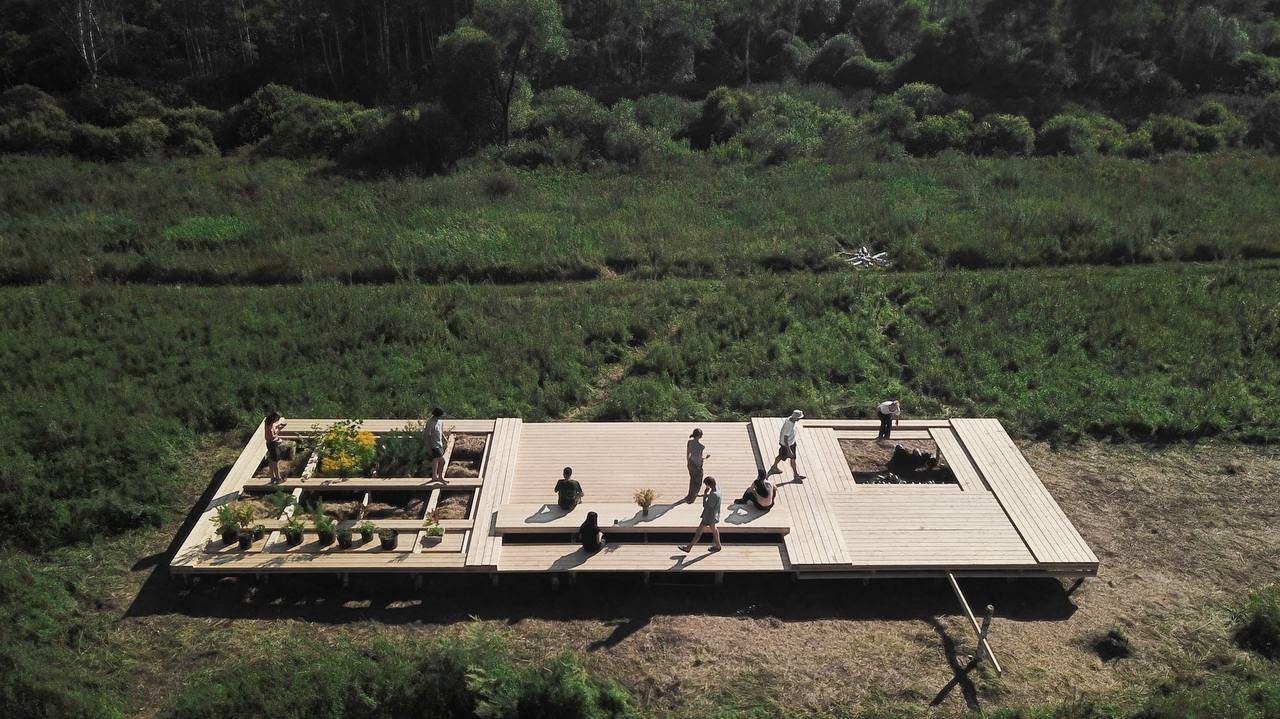
200 Boards

Pavilion, 2023Nikola-Lenivets art parkWith Meganom architects and Green Department

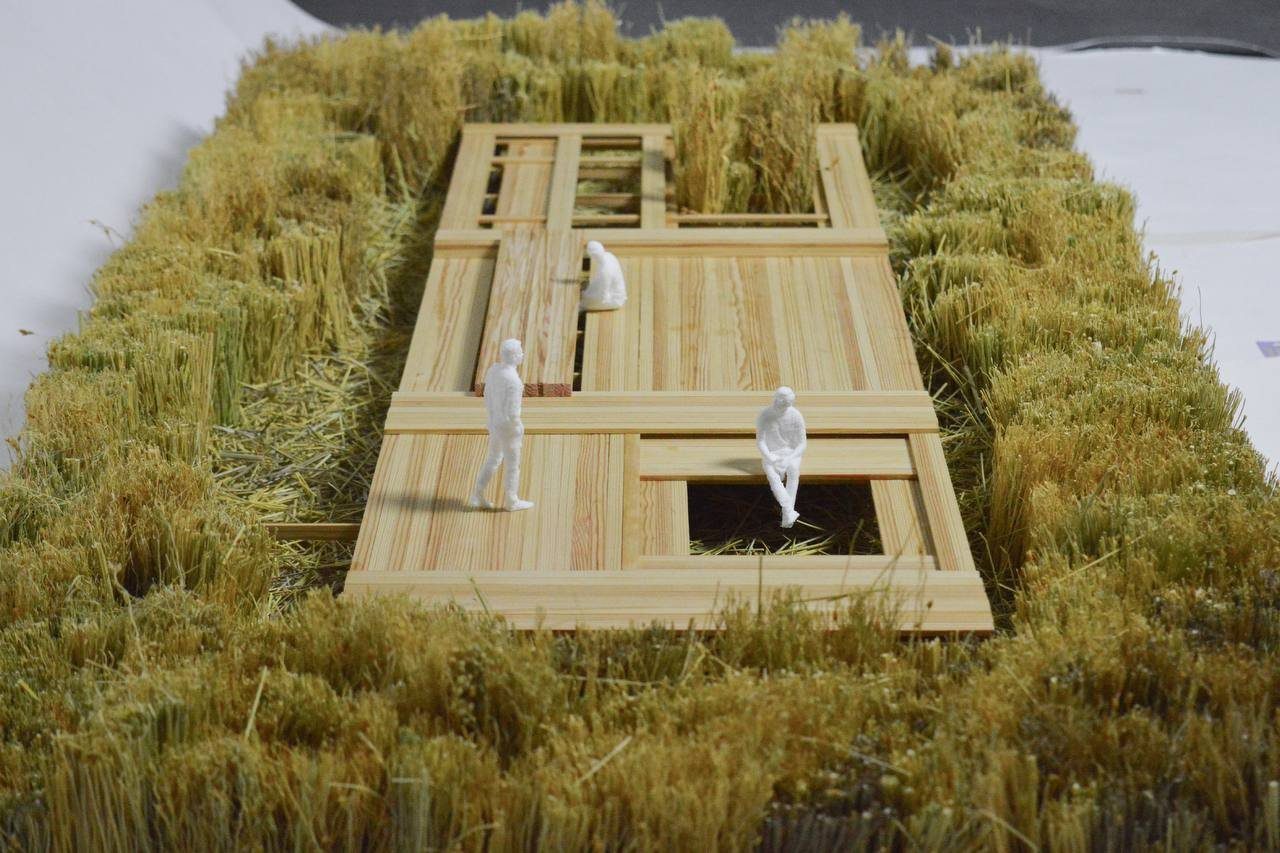
A competition by Meganom for a pavilion made of two hundred boards. Our project reached the final and was built in Nikola-Lenivets.

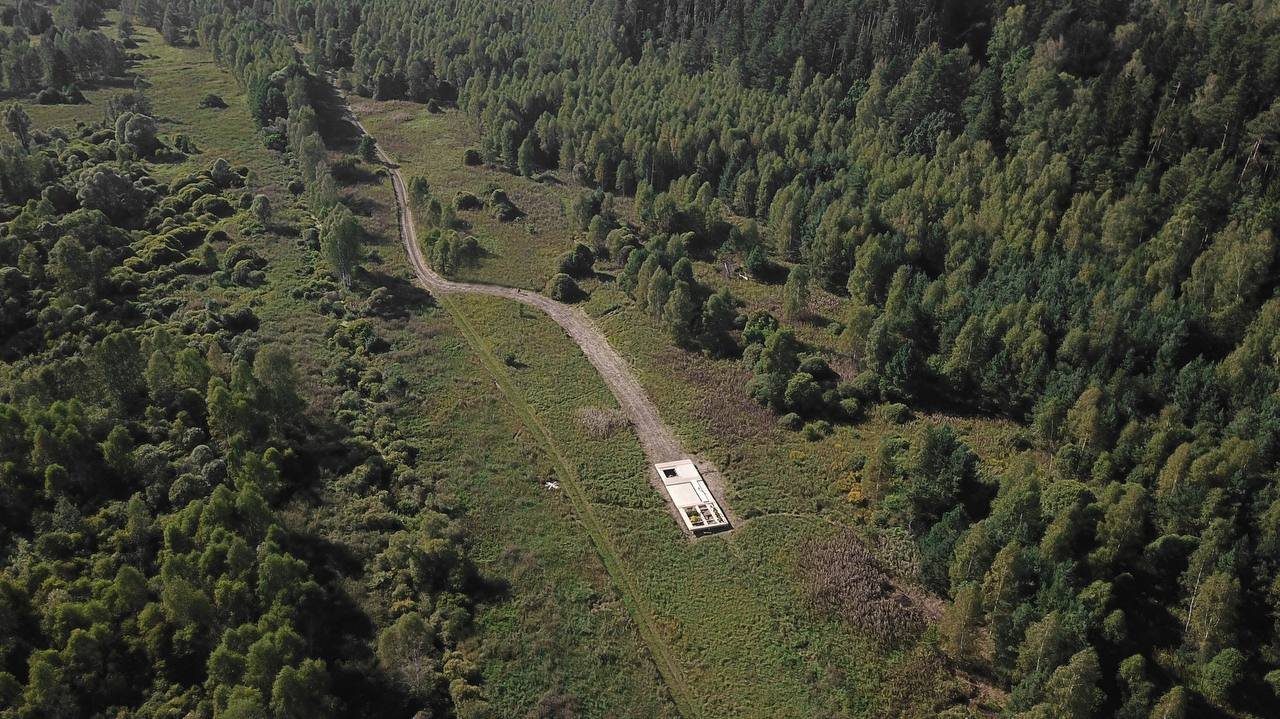
The wooden deck is raised above the field. Openings are left in it so the grass keeps growing through, and the pavilion becomes part of the meadow instead of pushing it out.

Concept, visualisation, model, installation
Wooden deck pavilion in a meadow, aerial view
Pavilion and path through the field, aerial view
Competition model of the pavilion
Competition model

TEMPERATYRA_5

Conceptual project, 2024ExhibitionFabrika Centre for Creative Industries, Moscow

You can feel nostalgic for a place you have never been. Our generation has such places: meadows, hills and empty hangars from video games where we wandered for hours.

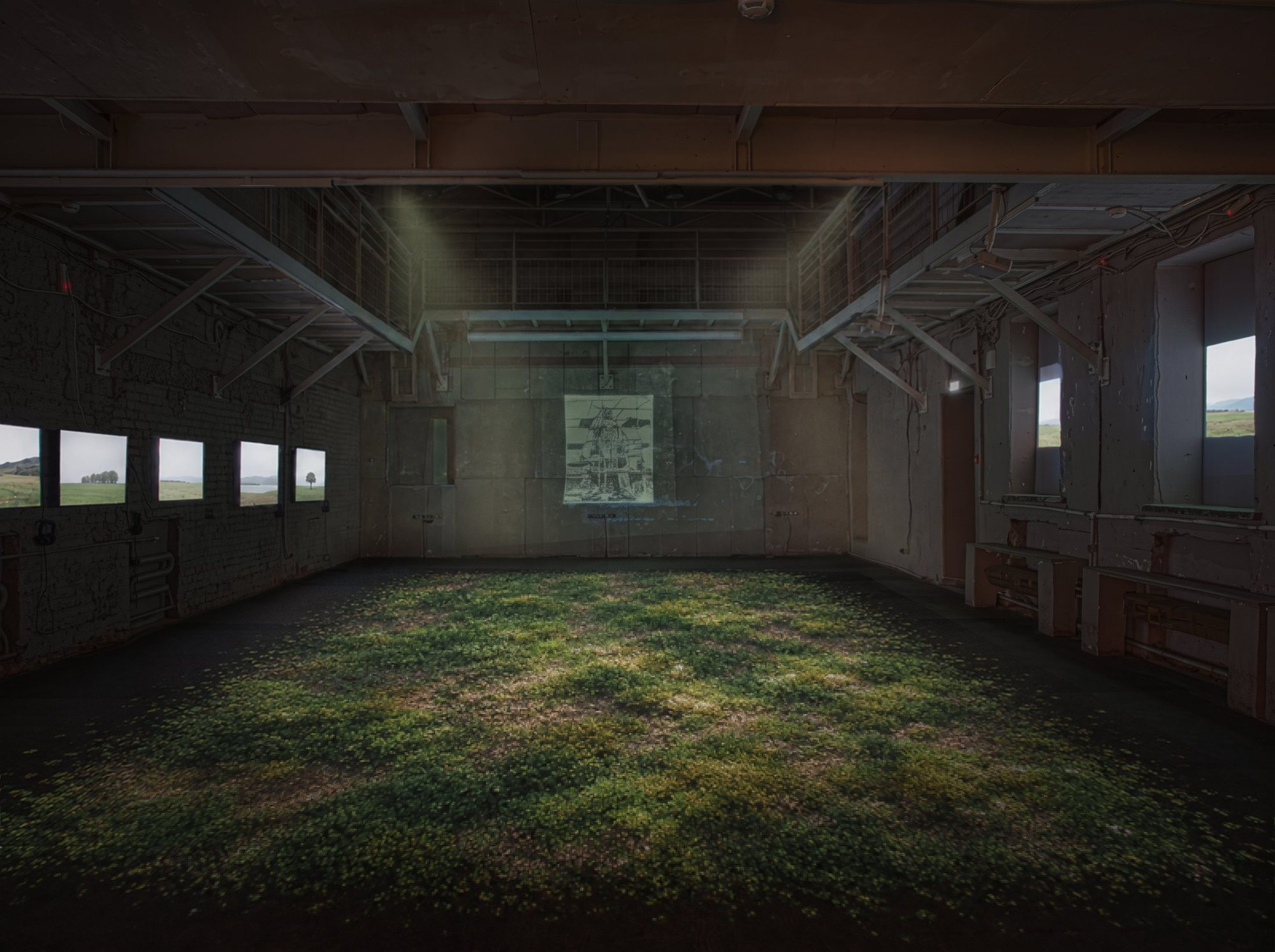
Sometimes we recognise them in a real landscape. The project brings a game landscape into the Fabrika space: a field of grass under the workshop roof and a screen where the horizon should be. The viewer stands inside a familiar picture and cannot remember where they know it from.

Field of grass inside a workshop hall with a screen on the far wall
About

Darius Nazarov

Darius Nazarov (b. 2002) is an artist based in Belgrade, Serbia, trained in parametric architecture at the Moscow Architectural Institute. He works with experimental art-and-science games and media installations, using digital systems to study natural processes.

With architect Polina Ishukova he founded OGO×WOW Buro, which builds pavilions and installations in art parks and makes browser games, projection mapping and curated exhibitions. He has taught at the MARCH Architecture School and the HSE Art and Design School.

Exhibitions and festivals

Mold.log and earlier work by the artist and OGO×WOW Buro:

  • 2026Async Museum — Mold.log
  • 2026CMMAS online residency, Morelia, Mexico — Mold.log
  • 2026Bucharest miniCOLLAGE Biennale, Bucharest
  • 2026CyberFrames: ExtraLives, Boston Cyberarts Gallery, Boston
  • 2026Video Game Art Show, Another Corner
  • 2025The Starlings Have Arrived, ArtMag Gallery / Winzavod Centre for Contemporary Art, Moscow
  • 2025Birdhouse, Kashirka Gallery, Moscow
  • 2025KRUTO 2025, Krutoyak
  • 2025ARCH Moscow, Gostiny Dvor
  • 2024TEMPERATYRA_5 exhibition, Fabrika Centre for Creative Industries, Moscow
  • 2024Signal festival, Nikola-Lenivets
  • 2024Birdhouse, Archstoyanie for Children, Nikola-Lenivets
  • 2024A New Life for Everyday Things, Yandex Museum, Moscow and Saint Petersburg
  • 2023Signal festival, Nikola-Lenivets, Screen pavilion
  • 2023200 Boards, Nikola-Lenivets
  • 2023Architecton. Open Source City, SA Lab section
  • 2023Open City, Shchusev State Museum of Architecture, Moscow